Comidos
SCAN · EAT · LOVE

Two ways to understand your food.

Scan a packaged-food barcode or capture a prepared dish. Comidos turns available food evidence and AI-assisted analysis into one detailed, readable nutrition report.

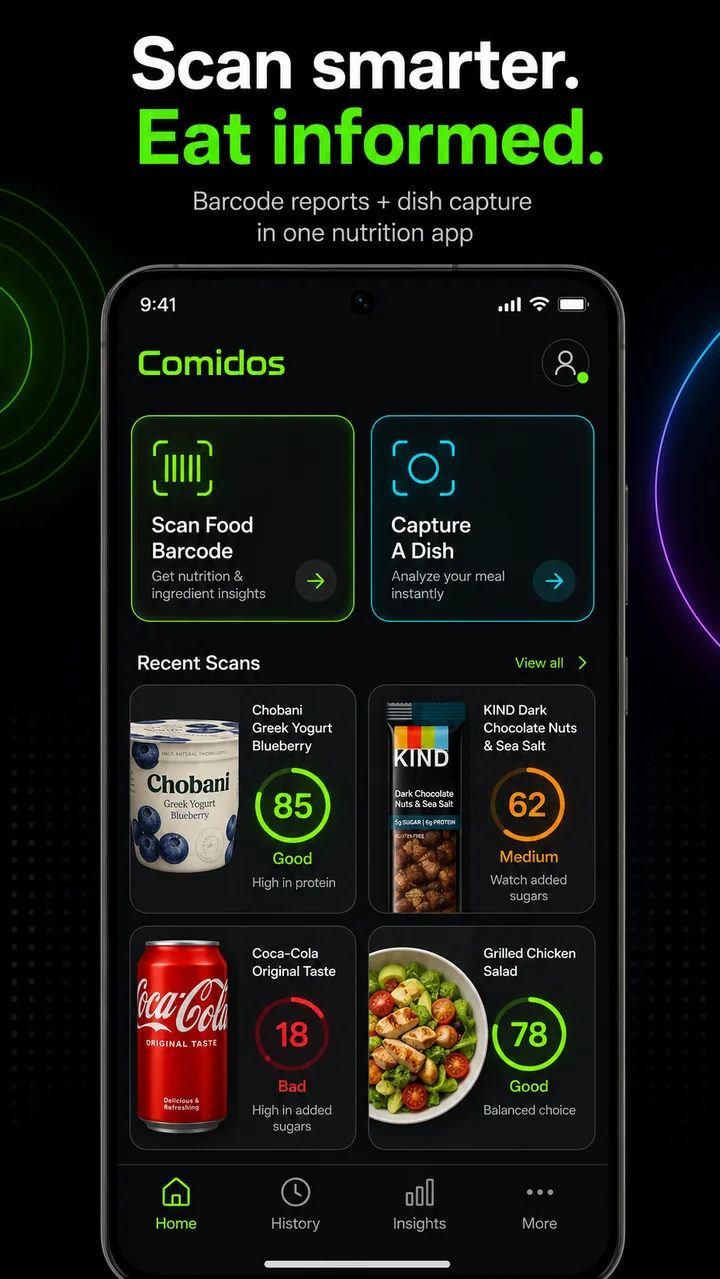
Get it on Google PlayComidos home screen with Scan Food Barcode and capture a meal dish
Two core services

Barcode intelligence + visual dish analysis

Both services use the same Comidos design language and detailed nutrition model, but the evidence is different. Barcode reports can use structured product databases; dish reports are photo-based estimates and clearly preserve that uncertainty.

SERVICE 1

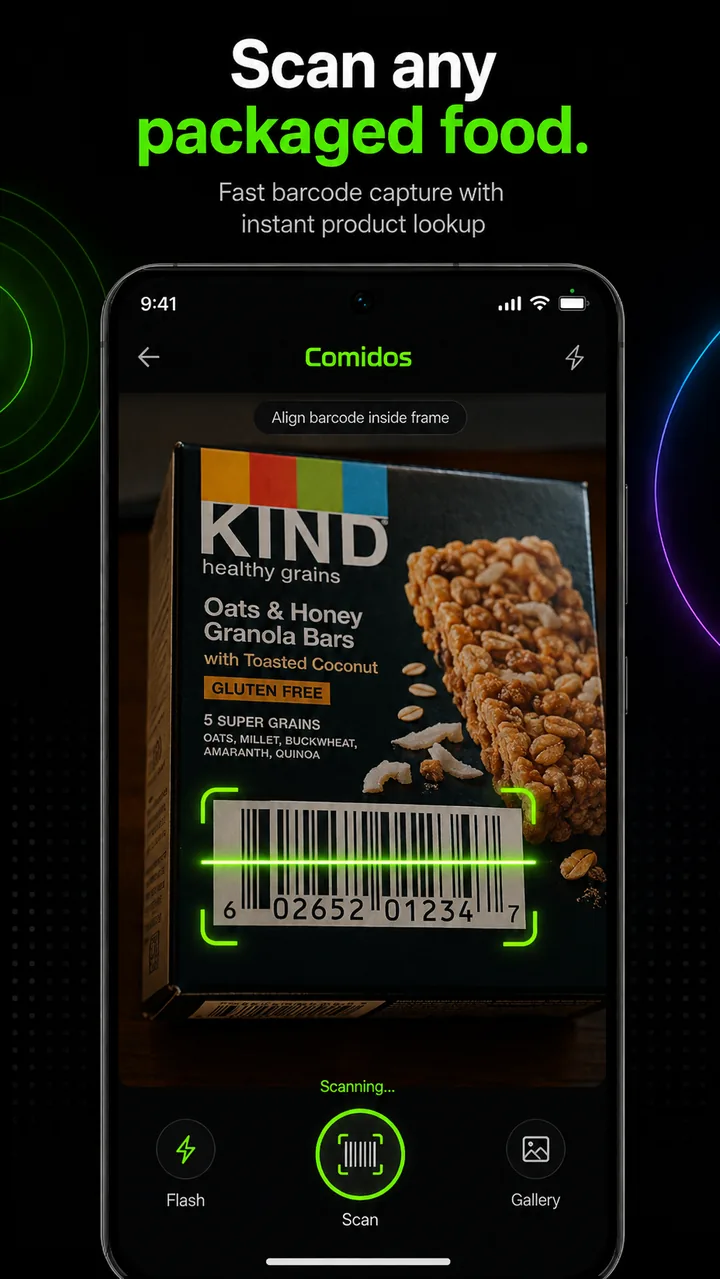
Scan Food Barcode

For packaged foods and drinks with a UPC/EAN/GTIN. Comidos resolves product evidence, fills supported gaps, reconciles contradictions and builds the packaged-food report.

  • Camera barcode scanning + manual entry
  • Product identity, brand, quantity and category
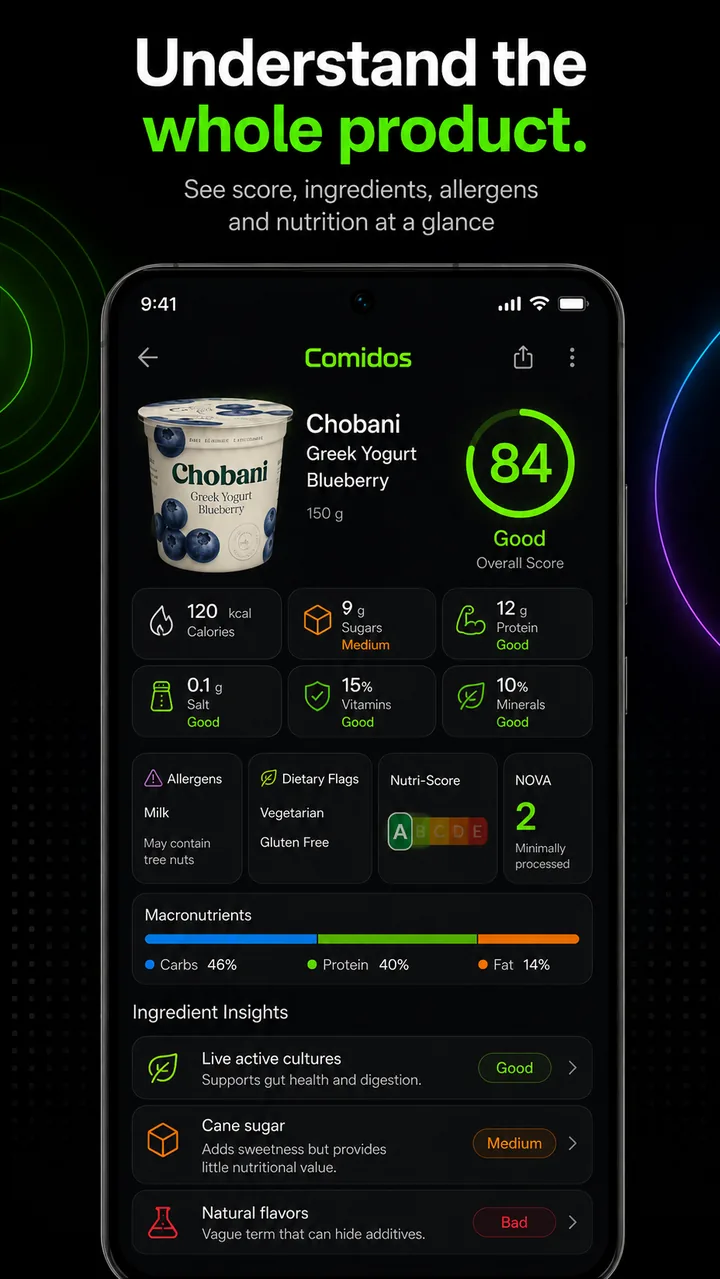
  • Overall Score and Overall Product Summary
  • Ingredients, explanations, additives and allergens
  • Dietary flags and certifications
  • Nutri-Score, NOVA and Eco-Score when supported
  • Macronutrients, fat profile, vitamins and minerals
  • Extended nutrition, positives/concerns and provenance
  • Suggestions when supported
Comidos barcode scanner
SERVICE 2

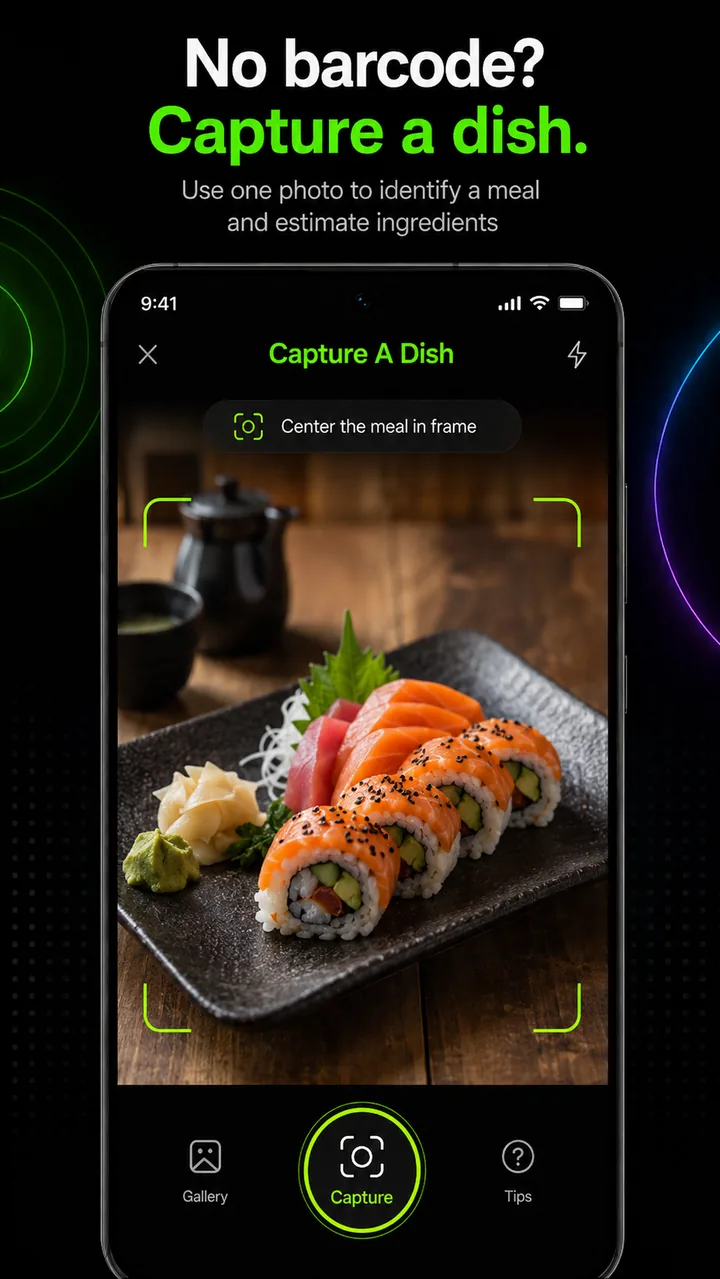
capture a meal dish

For prepared meals, restaurant food and dishes with no barcode. Take one still photo inside Comidos; ling analyzes the image and returns an estimated dish report.

  • Camera capture only — no gallery upload workflow
  • Dish photo displayed in the report session
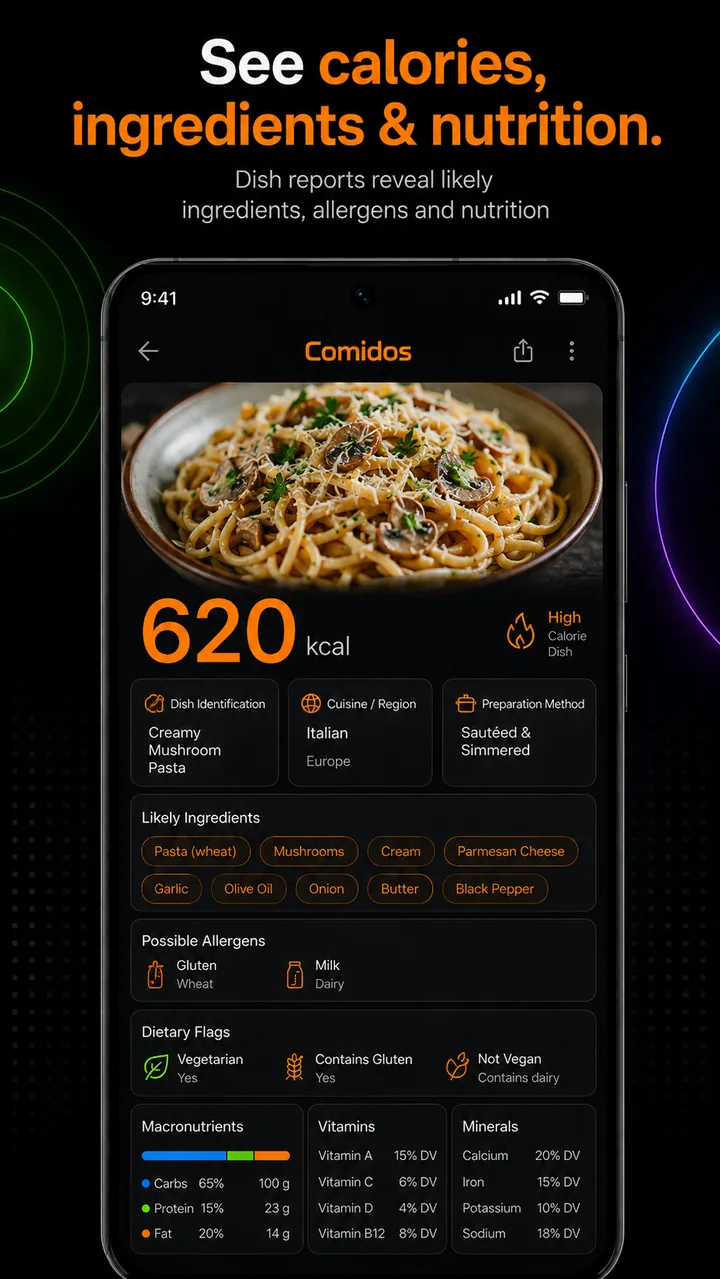
  • Large estimated calories hero directly below the photo
  • Dish identification, cuisine/region and preparation method
  • Visible, likely and possible ingredients
  • Possible allergens with High / Likely / Possible evidence and staff-confirmation guidance
  • Dietary compatibility including Vegetarian, Vegan, Pescatarian, major *-Free checks, Halal/Kosher caution, pork and alcohol
  • Nutrition Summary and Macronutrients
  • Fat Profile, Vitamins, Major Minerals, Trace Minerals and Other Nutrition
  • Positives / Concerns and estimation notice
Dish reports intentionally do not include: packaged-food Overall Score, Nutri-Score, NOVA, Eco-Score, or scoring methodology.
Comidos capture a meal dish camera
How it works

One app, two evidence paths

1

Choose

Select Scan Food Barcode for a packaged product or capture a meal dish for prepared food.

2

Collect evidence

Barcode scans resolve structured product data. Dish capture sends the still image for requested AI analysis.

3

Analyze & reconcile

Comidos normalizes fields, fills supported gaps and applies cross-field consistency rules before rendering.

4

Read the report

Review ingredients, allergens, dietary context and detailed nutrition using the same premium report system.

Inside Comidos

The new dark-neon app experience

The website now mirrors the visual system used in the redesigned Android app: layered black surfaces, thin neon borders, circular score rings, large dish calories, compact nutrition cards and Green / Orange / Red food context.

Comidos home screen

Home

Two primary actions and a fast 2-column Recent Scans grid.

Barcode scanner

Barcode Scanner

Clean neon scan frame with automatic barcode detection.

Packaged-food report

Barcode Report

Score, ingredients, allergens, grades and deep nutrition.

capture a meal dish

capture a meal dish

Camera-first meal capture with no upload workflow.

Dish report

Dish Report

Large calories, dish identity, likely ingredients and nutrition.

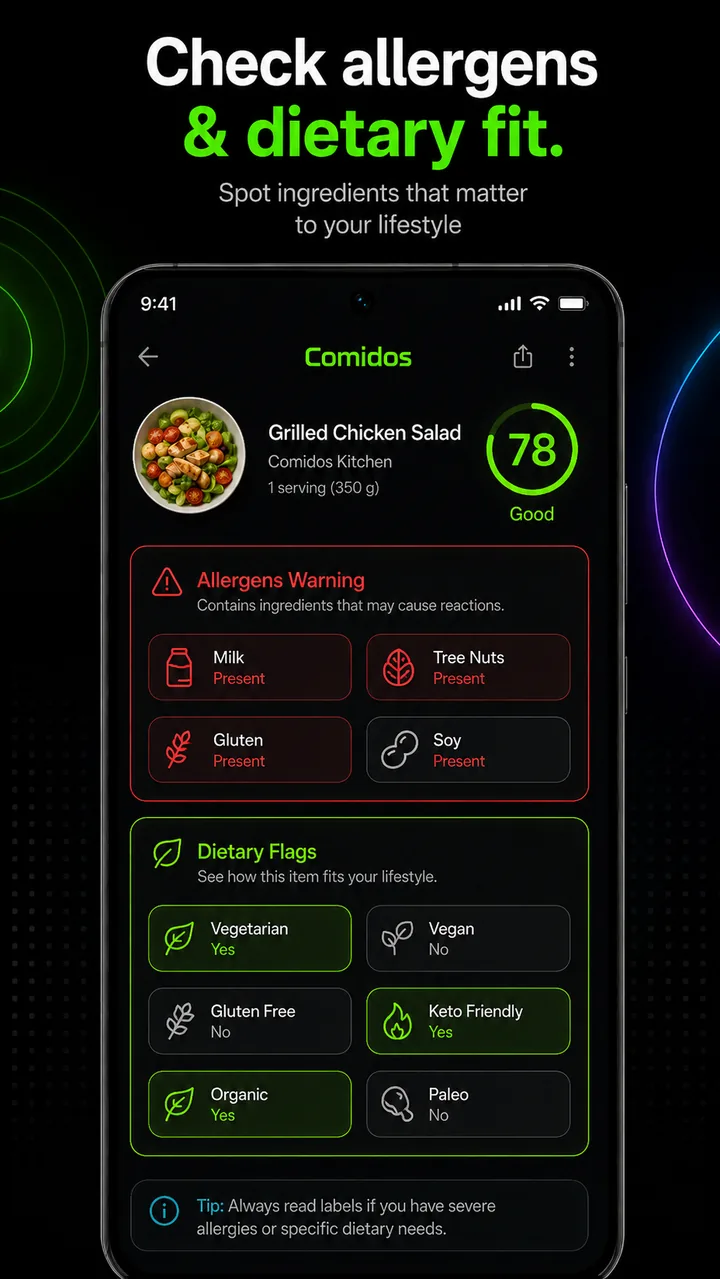
Allergens and dietary flags

Allergens & Dietary Fit

Clear warnings and compatibility indicators.

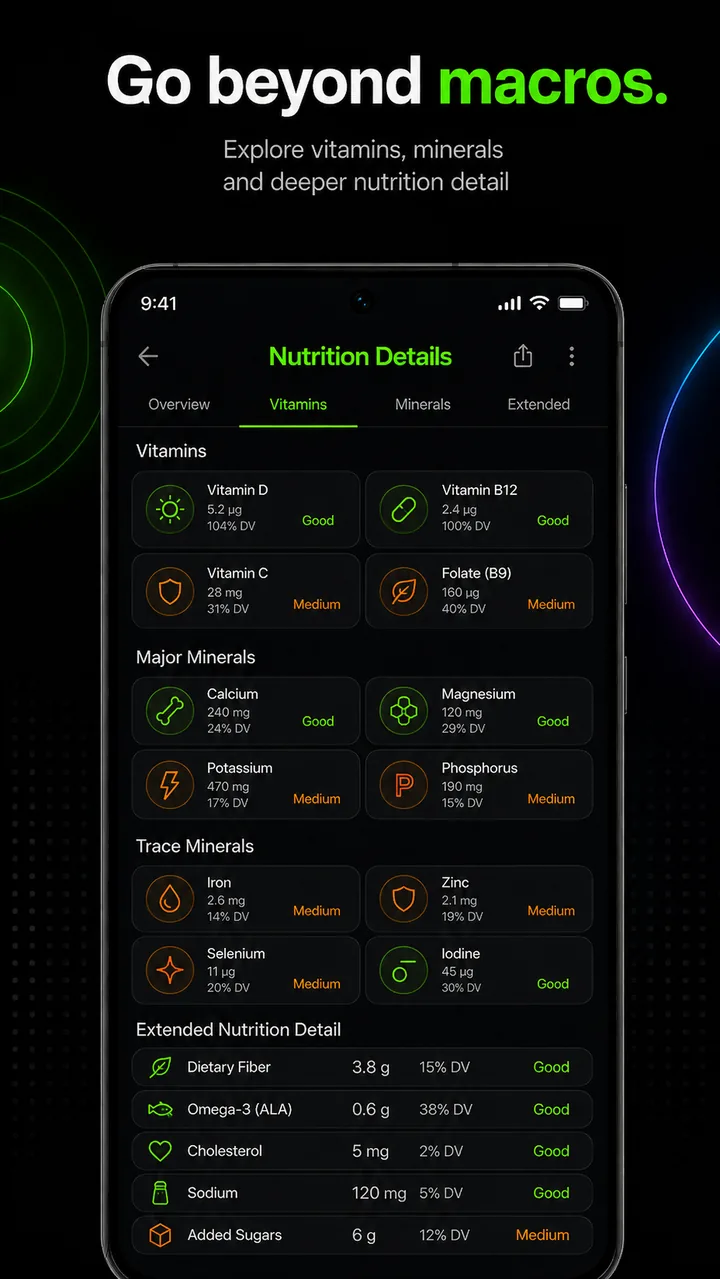
Vitamins and minerals

Deep Nutrition

Vitamins, major minerals, trace minerals and extended detail.

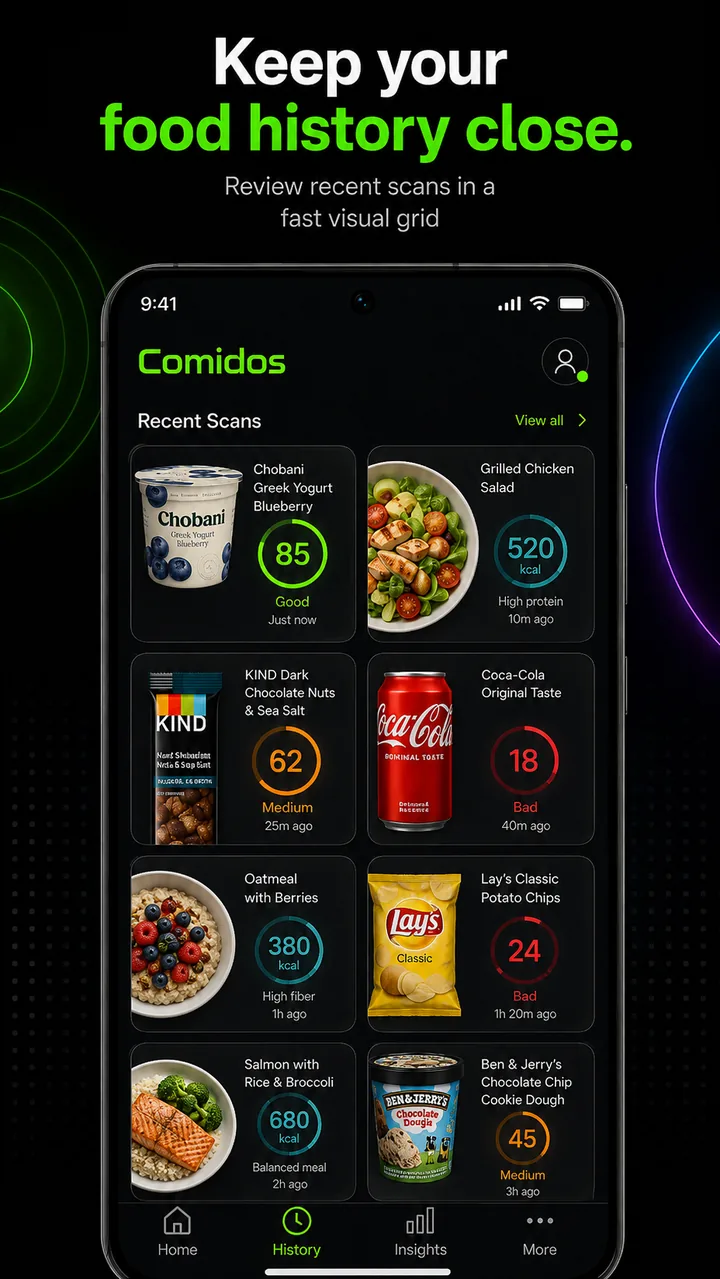
Recent scans

Recent Scans

Visual 2-column history with photos and prominent score/calorie badges.

Scan Food Barcode

Packaged-food report sections

Fields appear when supported by the resolved evidence. Missing values are not silently treated as zero, and positive canonical nutrients are expected to survive through the final rendered report.

Core identity & score

Product imageEligible packaged-food image.
Product nameResolved marketed name.
BrandBrand/manufacturer when available.
Quantity / serving sizePackage and serving context.
Main CategoryCanonical category used for analysis.
CategoriesAdditional resolved category context.
BarcodeScanned UPC/EAN/GTIN.
Overall Score0–100 informational packaged-food score.
Overall Product SummaryCalories/Energy, carbs, sugars, fiber, protein, fats/oils, salt, vitamins, minerals, vegetables, fruits, processing and additives where supported.

Ingredients, allergens & dietary context

Ingredients textResolved ingredient declaration.
Ingredient explanationsPlain-language explanation of supported ingredients.
AdditivesName/code, description and concern tier where supported.
AllergensDeclared allergens.
Traces / may containCross-contact information kept separate from contains.
Other sensitivitiesOther ingredient-related sensitivities when supported.
Dietary FlagsVegetarian, Vegan, Gluten-Free, Keto-Friendly, Paleo, Whole Grain, Alcohol and Pork Products where supported.
Organic / certificationsOrganic and other certification status where available.

Packaged-food indicators

Nutri-ScoreOfficial/resolved A–E grade where supported.
Nutri-Score Nutrient LevelsLow / moderate / high nutrient-level context when supported.
NOVAOfficial/resolved processing group 1–4.
NOVA summaryProcessing explanation consistent with the structured group.
Eco-ScoreOfficial environmental grade when verified evidence exists.
Eco-Score summaryAI-assisted explanation grounded in available environmental evidence.

Nutrition — all supported families

Values can carry their own unit and basis, including per (100 g) or per (100 mL). Zero-valued nutrients are not shown simply to fill the schema.

Nutrition SummaryCalories, protein, carbohydrate, total fat, fiber, sugars, added sugars, sodium/salt and cholesterol when available.
MacronutrientsCalories, protein, carbohydrates, fat, fiber, sugars, added sugars and starch.
Fat ProfileSaturated, trans, mono/polyunsaturated, omega-3, omega-6 and cholesterol.
VitaminsA, B1, B2, B3, B5, B6, B7, folate/B9, B12, C, D, E and K.
Major MineralsSodium, potassium, calcium, magnesium, phosphorus and chloride.
Trace MineralsIron, zinc, copper, manganese, iodine and selenium.
Other NutritionCholine, caffeine and additional positive canonical nutrients.
Green / Orange / Redling provides category-relative good / medium / bad nutrition context. Overall Score and official external grades keep separate conventions.

Evidence & consistency

USDA · structuredOpen Food Facts · structuredDerived · calculatedling · AI-assisted

Comidos reconciles canonical values, unit/basis consistency, numeric relationships, ingredients/explanations, allergen/dietary implications and cross-section structured contradictions before rendering. Independent scoring systems are not forced to agree merely because their overall grades differ.

capture a meal dish

Dish report sections

Dish fields are estimates from the captured photo and typical food context. The report is deliberately uncertainty-aware: it distinguishes visible, likely and possible ingredients and never treats a photo as a verified ingredient label.

Photo, calories & dish identity

Captured dish photoShown in the report session.
Large estimated caloriesProminent calorie estimate directly under the photo, using portion context when available.
Dish nameAI-assisted dish identification.
Main CategoryCanonical dish/food category.
CuisineLikely cuisine style.
Region / country styleGeographic context when reasonably inferable.
Preparation MethodLikely cooking/preparation method.
Estimated portionEstimated total grams/portion context when available.

Ingredient analysis

Visible IngredientsComponents actually visible in the photograph.
Likely IngredientsStrongly associated with the identified dish/recipe.
Possible IngredientsRecipe-dependent or hidden ingredients that may vary.
Ingredient ExplanationsPlain-language context while preserving uncertainty.

Possible allergens & dietary compatibility

Possible AllergensLikelihood-aware analysis for milk/dairy, egg, wheat/gluten, peanuts, tree nuts, soy, sesame, fish, shellfish, mustard, celery, lupin, sulfites and other supported cautions.
Reason / explanationWhy an allergen is considered likely or possible.
Dietary FlagsVegetarian, Vegan, Pescatarian, Gluten-Free, Dairy-Free, Egg-Free, Nut-Free, Soy-Free, Sesame-Free and other supported compatibility flags.
Religious / ingredient cautionsHalal/Kosher likelihood, pork and alcohol where relevant.
Safety: a photo cannot confirm hidden ingredients, cross-contact, Halal/Kosher certification, sourcing or kitchen preparation. For severe allergies or strict dietary/religious requirements, confirm directly with the restaurant/preparer.

Dish nutrition

Nutrition SummaryHigh-level estimated nutrition for the dish/serving.
MacronutrientsCalories, protein, carbohydrates, fat, fiber, sugars, added sugars and starch when meaningfully estimable.
Fat ProfileSaturated, trans, mono/polyunsaturated, omega-3, omega-6 and cholesterol.
VitaminsSupported vitamin estimates when meaningful.
Major MineralsSodium, potassium, calcium, magnesium, phosphorus and chloride.
Trace MineralsIron, zinc, copper, manganese, iodine and selenium.
Other NutritionCholine, caffeine and other relevant nutrients.
Zero-value ruleZero/meaningless nutrient rows are omitted rather than shown as filler.

Positives / Concerns + estimation notice

PositivesHelpful contextual observations such as protein, vegetables, fiber or useful nutrient sources.
ConcernsPotential sodium, saturated-fat, sugar, allergen or hidden-ingredient concerns.
AI estimation noticeExplains that identity, ingredients, portions, allergens and nutrition are estimates from the photograph and typical recipes.
Not included in dish mode: Overall Score,, Nutri-Score, NOVA, Eco-Score, score methodology.
Data sources & processing

Different evidence, one canonical report model

USDA FoodData Central

Packaged-food identity, serving, ingredients and nutrition evidence when matching records are available.

Open Food Facts

Barcode-linked product identity, ingredients, allergens, categories, images, nutrition and recognized product indicators subject to availability.

AI assistance

Supported missing-field analysis, category-relative food context, capture a meal dish image analysis. AI can be wrong.

Canonical reconciliation

Comidos normalizes units/bases, reconciles source conflicts and applies structured consistency checks before rendering.

FAQ

Common questions

What is the difference between Scan Food Barcode and capture a meal dish?

Barcode scanning is for packaged foods and can use barcode-linked USDA/Open Food Facts evidence plus AI-assisted gaps. capture a meal dish analyzes a still food photo and returns estimates based on the visible meal and typical recipe context.

Does capture a meal dish upload from the gallery?

No. The current Comidos dish workflow is camera-capture only. You intentionally capture one still food image for the requested analysis.

Is the captured dish photo permanently stored?

Comidos sends the captured image through its backend to the configured AI service for the requested analysis. Comidos does not store it as a reusable shared dish-photo cache or photo library. Temporary processing can occur as required to complete the request.

Can Comidos confirm food allergies from a dish photo?

No. Dish allergen analysis is probabilistic and can miss hidden ingredients or cross-contact. Verify directly with the restaurant or food preparer when a mistake could create a health risk.

Why does a dish report not show Overall Score, Nutri-Score, NOVA or Eco-Score?

Those indicators belong to the packaged-food report/evidence model. Dish reports intentionally focus on identity, estimated ingredients, possible allergens, dietary compatibility and estimated nutrition.

Does Comidos VIP include a trial or Comidos refund policy?

No trial period is offered. VIP currently includes 1,000 scans per Google Play subscription billing month, with no 5-minute cool-down and no separate daily scan cap. Unused scans do not accumulate or roll over. The service also applies a 10-scan-attempts-per-rolling-60-seconds anti-abuse limit. Comidos does not offer discretionary refunds. Google Play billing, cancellation and any mandatory refund rights are governed by Google Play rules and applicable law.

Can Comidos make mistakes?

Yes. Structured food databases can be incomplete or outdated, product formulations and restaurant recipes can change, and AI can make errors. Verify important information against current packaging or direct restaurant/preparer confirmation.

Is Comidos medical advice?

No. Comidos is a general informational nutrition tool, not a medical device, and does not diagnose, treat, cure or prevent medical conditions.